FotoNation Completes a Pre-A Round to fund the development of its TriSilica chip lead by Enterprise Ireland and Silicon Gardens

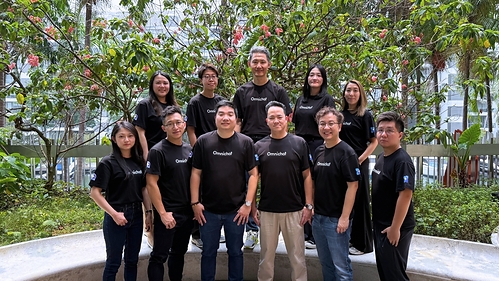
GALWAY, Ireland, May 7, 2026 — FotoNation® LTD., a Galway-based company, announced it has closed its Pre-A round led by Enterprise-Ireland and Silicon Gardens, with participation from other notable Angels.

This capital will accelerate FotoNation’s mission to develop its TriSilica® product: an ultra-low-power, perception-AI chip. Specifically, the funds will be used to progress the completion of the MPW prototype, TS-210.

” This investment, from a leading European VC as well as from the Irish Government, marks a pivotal moment for our company. On behalf of the management team, I thank our investors for their shared conviction in our long-term potential, cementing FotoNation as a leader in the European AI hardware race”, said Petronel Bigioi, CEO, FotoNation.

Since its Q3/2024 reincarnation, FotoNation, with many of its original team members, engaged in numerous design wins and reclaimed its market position as a leader in optimized ultra-low power perceptual-AI solutions. Investor support validates market demand for a dedicated hardware sensor-processing chipset.

“FotoNation is building ultra-efficient, hardware-accelerated edge AI that fuses vision and multimodal sensing on device,” said Gregor Rebolj, Managing Partner, Silicon Gardens. “Their technical depth and focus on privacy-aware experiences position them to help define the post-smartphone era of AI companions, from Physical AI to perceptual intelligence.”

Enterprise Ireland, the Irish government’s enterprise development agency, co-led the round, further cementing FotoNation’s commitment to the West of Ireland.

Leo McAdams, Head of Advanced Manufacturing and Lifesciences at Enterprise Ireland said, “Enterprise Ireland is proud to support FotoNation’s next phase of growth, reinforcing Ireland’s advanced technology and semiconductor ecosystem. This investment underscores our commitment to helping ambitious Irish companies scale globally, create high–value jobs across all regions, and build long–term economic resilience. We look forward to working closely with FotoNation as it seeks to expand internationally.”

About FotoNation:
FotoNation Ltd. is an Irish AI  company headquartered in Galway, with a development center in Brașov, Romania. FotoNation designs silicon and IP built around a single conviction: eliminate unnecessary data before inference begins. Its TriSense™ IP core brings together neural ISP, sensor fusion, and  AI for perceptual cognition under extreme power constraints. Its TriSilica® chip family adds industry-first high-capacity bonded memory, translating that architecture into production silicon for devices that perceive, adapt, and act. FotoNation’s technology is embedded in more than 4 billion products worldwide, contributing to dozens of top-tier tape-outs across the consumer and edge AI markets. For more information, please visit: www.fotonation.com.

About Enterprise Ireland: 
Enterprise Ireland is the Irish Government agency that works with Irish enterprises to help them start, compete, scale and connect and win export sales in global markets. Enterprise Ireland partners with entrepreneurs, Irish businesses, and the research and investment communities to develop Ireland’s international trade, innovation, and competitiveness. In this way, we support sustainable economic growth and regional development and help create and sustain employment in Ireland.
www.enterprise-ireland.com

About Silicon Gardens: 
Silicon Gardens is a venture capital firm, run by entrepreneurs who have built and scaled their own companies. They are  dedicated to backing the next generation of high-growth innovative technology businesses. Silicon Gardens partner closely with founders to help them build durable, category-defining companies.
https://www.silicongardens.com/

Media Contact:
[email protected]
www.fotonation.com

SOURCE FotoNation

Corgi Raises $160 Million Series B to Continue Expanding Its Full-Stack Insurance Platform Into New Verticals

SAN FRANCISCO, May 6, 2026 — Corgi announced today it has raised $160 million in Series B funding at a $1.3 billion valuation, advancing its mission to build the first AI-native, full-stack insurance platform for startups. The company was founded by Emily Yuan and Nico Laqua.

The round was led by TCV, with participation from both existing and new investors including Oliver Jung, Leblon Capital, Kindred Ventures, Repeat VC, Zone 2 Ventures, Audeo Ventures, Quadri Ventures, First Order Fund, Vocal Ventures, Maiora Ventures, Nordstar, Seven Stars Ventures, Hexa Capital, Alpha Square Group, GSBackers, OurCrowd, Alumni Ventures, Global Growth Fund, and other strategic investors.

This financing builds on Corgi’s previously announced $108 million across its seed and Series A rounds, backed by investors including Y Combinator, Kindred Ventures, Contrary, and more. Since receiving regulatory approval in July 2025, Corgi has launched what it describes as the first AI-native, full-stack insurance platform purpose-built for startups. This new funding brings Corgi’s  total amount raised to over $268 million.

The new capital will support the continued expansion of Corgi’s startup insurance products, including broader coverage, deeper distribution, and ongoing investment in the AI systems that power underwriting, claims, and policy operations. The company is also moving into new verticals, beginning with trucking, where it plans to bring faster quoting, more adaptive risk models, and coverage aligned with real-world operations.

“Insurance is one of the largest industries in the world, but it’s still built on infrastructure from centuries ago,” said Emily Yuan, co-founder and COO of Corgi. “We started with property management and are expanding into trucking insurance, payroll, and small business, automating some of the hardest workflows in the real economy.”

Corgi’s long-term vision is to modernize one of the most complex sectors in financial services. Traditional insurance is fragmented across TPAs, MGAs, reinsurers, and carriers, resulting in slow processes, disconnected systems, and delayed decision-making. Corgi is rebuilding this stack from the ground up to enable faster decisions, streamlined operations, and real-time coverage.

“Where other companies might take the boring but safe path, Corgi will always dream bigger, accomplish more, and take more swings for the fences,” said Nico Laqua, co-founder and CEO of Corgi. “We will for sure always be the most passionate, genuine, curious, and ambitious of any company.”

About Corgi
Corgi is an AI-native, full-stack insurance carrier built for startups. As a licensed carrier, Corgi designs and manages insurance end-to-end, using modern infrastructure and AI to power underwriting, policy management, and claims. The company delivers fast, flexible coverage tailored to how startups operate and scale.

Media Contact
Erika Lee
Head of Brand
[email protected]

SOURCE Corgi Insurance

JuliaHub recauda 65 millones de dólares en su ronda de financiación Serie B y lanza Dyad 3.0

– JuliaHub recauda 65 millones de dólares en su ronda de financiación Serie B y lanza Dyad 3.0, que lleva la IA agencial a los gemelos digitales industriales

Dyad, la primera plataforma de IA agencial del mundo para la ingeniería de hardware, lleva la IA física al diseño y las pruebas de sistemas complejos, reduciendo el tiempo de I+D de meses a tan solo unos días.

CAMBRIDGE, Mass., 6 de mayo de 2026Hoy, JuliaHub anuncia el lanzamiento de Dyad 3.0 y una ronda de financiación Serie B de 65 millones de dólares liderada por Dorilton Capital, con la participación de General Catalyst, AE Ventures y el inversor tecnológico y exconsejero delegado de Snowflake, Bob Muglia. Dyad supone un cambio fundamental en la forma en que se diseñan y construyen los sistemas físicos, al incorporar agentes de IA autónomos al diseño y las pruebas digitales de maquinaria industrial. Desde bombas de calor hasta satélites y semiconductores, los equipos de ingeniería pueden reducir los ciclos de diseño, pruebas y construcción de meses a minutos. Varias empresas de la lista Fortune 100 ya están utilizando Dyad y Julia en diversos sectores industriales como el aeroespacial, el gubernamental, el automotriz, el de climatización y el de servicios públicos

Daniel Freeman, quien lideró la ronda de financiación Serie B para Dorilton Capital, comentó: “El modelado de sistemas es una de las capas estratégicamente más importantes de la arquitectura de ingeniería nativa de IA, ya que es donde convergen la física, la lógica de control y la IA. JuliaHub ha creado algo extraordinario con Dyad: una plataforma que no solo modela sistemas, sino que los compila, guiando a los ingenieros desde el concepto hasta el código de control de producción en un único entorno. Creemos que JuliaHub tiene el potencial de convertirse en una de las empresas líderes en IA física, y nos enorgullece apoyar al equipo en su rápida expansión hacia el mercado de Dyad”.

El “problema difícil” de la innovación en hardware

La ingeniería física representa uno de los sectores más grandes que aún no se ha beneficiado plenamente de la revolución de la IA. Si bien herramientas como Claude Code, Codex y Gemini han transformado el desarrollo de software, los ingenieros industriales siguen limitados por herramientas obsoletas. McKinsey estima que se necesitará una inversión acumulada de 106 billones de dólares hasta 2040 para satisfacer la necesidad de infraestructura nueva y actualizada. Los ingenieros que planifican y construyen estas actualizaciones necesitan una solución que les permita avanzar al ritmo del software mejorado con IA. Ahí es donde entra Dyad.

Dyad ofrece a los equipos de ingeniería un entorno basado en IA para modelar, probar y validar sistemas industriales: un ejemplo de Claude Code aplicado al mundo físico. Dyad 3.0 se lanza hoy y se basa en Dyad 1.0, lanzado en junio de 2025, y Dyad 2.0, lanzado en diciembre de 2025. Dyad conecta agentes autónomos con simulaciones físicas escalables, controles rigurosos, análisis de seguridad y la capacidad de generar código para sistemas embebidos, uniendo así el software con el mundo real. Ya sea una planta de tratamiento de aguas residuales o un automóvil, ya no se requiere un doctorado para desarrollar gemelos digitales altamente detallados, ajustar controladores para escenarios de implementación especializados e iterar en diseños de hardware para construir la máquina más eficiente desde el principio.

 “No se trata de ayudar a los ingenieros a completar una pequeña tarea a la vez. Se trata de ingeniería automatizada a gran escala, donde los equipos pueden proporcionar una especificación completa a Dyad y este diseña el sistema completo. Especificación de entrada. Diseño de salida”, afirmó Viral Shah, consejero delegado de JuliaHub.

Gemelos digitales con aprendizaje automático científico

Los agentes basados en la nube de Dyad están diseñados para escanear continuamente el conocimiento científico mundial y así mejorar constantemente los modelos. Las pruebas de laboratorio automatizadas con IA se están ampliando para garantizar que los modelos se ajusten a la realidad física. La transmisión de datos combinada con el Aprendizaje Automático Científico (SciML) permite que los modelos evolucionen automáticamente a medida que el sistema aprende del mundo real. El ecosistema y el lenguaje de simulación de Dyad ofrecen una base sobre la cual todos estos aprendizajes se transmiten a los ingenieros para verificar los procesos, determinar si las suposiciones coinciden con los requisitos del cliente y actuar como intermediarios que garantizan la seguridad del producto final. El diseño de Dyad implica que los ingenieros no tienen que escribir cada línea de código para probar millones de diseños, a la vez que les proporciona las herramientas adecuadas para asegurar que los aviones permanezcan en el aire.

Prith Banerjee, vicepresidente sénior de Innovación de Synopsys, comentó sobre la colaboración con JuliaHub: “Dyad está transformando la ingeniería de sistemas al combinar IA científica, modelado automatizado y una potente canalización de compilación en un flujo de trabajo unificado. Integrada con el software de simulación Ansys TwinAI™ de Synopsys, permite crear gemelos digitales híbridos de alta fidelidad al integrar la simulación basada en la física con modelos basados en datos. Lo que antes requería un gran esfuerzo manual ahora se puede realizar de forma mucho más eficiente, acelerando todo el ciclo de vida de la ingeniería digital y redefiniendo cómo se diseñan y validan los sistemas inteligentes definidos por software”.

Dyad implementará la IA para la ciencia en el mundo real

La IA de propósito general no puede garantizar que un modelo obedezca las leyes de la física. En ingeniería física, un error no es un fallo que se pueda corregir; es el colapso de un puente o el incendio de una batería. Esta ha sido la barrera que ha impedido que la IA desempeñe un papel significativo en la ingeniería de hardware, hasta ahora. En recientes pruebas comparativas de agentes para el modelado de procesos químicos, los sistemas LLM generales como Codex, Claude Code (Opus) y Gemini apenas completaron la configuración inicial. Dyad automatizó casi por completo todo el proceso de creación de controladores predictivos de modelos para optimizar el rendimiento de una planta química, una tarea que normalmente llevaría semanas.

 “Se está produciendo una transformación radical en el software de diseño de sistemas de ingeniería, y Dyad está a la vanguardia. Las generaciones anteriores de herramientas no ofrecen la productividad ni la integración prometidas para aprovechar al máximo la IA. Con Dyad, puede modelar la física, desarrollar algoritmos de control con generación automática de código y crear gemelos digitales y modelos sustitutos precisos para el desarrollo rápido de modelos de inferencia de aprendizaje profundo, todo ello gracias a la IA. Dyad opera donde la física se encuentra con el análisis, ¡y los clientes y los accionistas salen ganando!“, afirmó David Joyce, exconsejero delegado de GE Aviation y vicepresidente de GE.

El lenguaje de modelado de Dyad está diseñado específicamente para que los agentes de IA lo comprendan fácilmente. Su lógica fundamental se basa en las leyes de la física, lo que permite a sus agentes razonar sobre cómo se mueven los fluidos a través de las máquinas, cómo la velocidad del viento y la temperatura afectan a los componentes y cómo fuerzas fundamentales como la gravedad dan forma al diseño. Esto produce modelos físicamente válidos en los que los ingenieros pueden confiar. Por ejemplo, en colaboración con Binnies, una empresa con 100 años de experiencia en la gestión del agua, y Williams Grand Prix Technologies, JuliaHub desarrolló un gemelo digital basado en SciML que utiliza solo cuatro entradas de sensores para predecir fallos en las bombas de los sistemas de distribución de agua con una precisión superior al 90 %.

 “Dyad representa un cambio radical para el sector del agua, permitiendo pasar de operaciones reactivas a una toma de decisiones predictiva a nivel de sistema”, afirmó Tom Ray, director de Productos y Servicios Digitales (Gemelos Digitales e IA) de Binnies. “Tiene el potencial de transformar la forma en que las empresas modelan la complejidad del mundo real, predicen fallos y optimizan el rendimiento a diario“.

Únase a nosotros para el evento de lanzamiento Dyad 3.0

Dyad 3.0 se presentará oficialmente en un evento en vivo el próximo mes, el 19 de mayo. Únase a nosotros para ver demostraciones del producto en directo y escuchar a nuestros clientes sobre cómo utilizan Dyad en diversos sectores, desde la industria aeroespacial y la climatización hasta los servicios públicos y la robótica.

Para obtener más información y consultas de los medios, contacte con: [email protected] 

Acerca de JuliaHub

JuliaHub es líder en IA científica y su misión es brindar a quienes abordan los desafíos científicos y técnicos más complejos del mundo herramientas de vanguardia basadas en IA en un entorno seguro y sin interrupciones. La empresa fue fundada en 2015 por los creadores de Julia, el lenguaje de código abierto de alto rendimiento desarrollado en el MIT y utilizado actualmente por más de un millón de desarrolladores en todo el mundo. JuliaHub combina computación matemática avanzada y experiencia en aprendizaje automático para habilitar técnicas de aprendizaje automático científico (SciML), soluciones de gemelos digitales y modelado y simulación de última generación en los sectores aeroespacial, automotriz y otros sectores industriales.

Foto: https://mma.prnewswire.com/media/2970068/Satellite_Photovoltaics_JuliaHub_Dyad.jpg
Foto: 
https://mma.prnewswire.com/media/2970067/Cooling_circuit_JuliaHub_Dyad.jpg
Logo: 
https://mma.prnewswire.com/media/2826187/JULIAHUB_Logo.jpg

Jetty Raises Over $2 Million to Build Infrastructure for Reliable Agentic AI Applications

Backed by AQC Capital, Hidden Layers Capital, Mila, and strategic angel investors, Jetty enables AI agents to run, evaluate, and learn from their own mistakes in production.

MONTREAL, May 6, 2026 – As companies deploy autonomous AI agents, what works in a demo often fails unexpectedly in production. Jetty builds the infrastructure layer to fix this, giving AI systems the ability to run end-to-end workflows, evaluate their own performance, and continuously improve.

“Enterprises need a way to deploy their models with the kind of audit trail required to build trust with their customers. Jetty is solving this critical pain point to allow AI to be reliably deployed.” said Alex Shee with Mila Ventures.

Jetty announces its raise of over $2 million in pre-seed funding led by AQC Capital (David Dufresne) and Hidden Layers Capital (Therence Bois). Strategic investors include Akinox Inc. (Alex Dahl) and angel investors experienced in scaling AI systems at frontier labs like Google and Meta AI.

“Most AI systems today are still fragile – they work in isolation but break under real-world complexity,” said Jonathan Lebensold, Founder and CEO of Jetty. “Jetty gives AI agents a mission, not just a prompt. By combining structured runbooks, isolated execution environments, and rigorous evaluation, we enable systems that can run, assess themselves, and iterate with a human in the loop until they meet a defined quality bar.”

Doina Precup, Professor at McGill University and CIFAR AI Chair, agrees: “As AI systems become more autonomous, ensuring they behave reliably in complex environments becomes a central challenge. Jetty is building critical infrastructure that enables these systems to evaluate their own performance and improve over time; something that will be essential as agentic AI moves into real-world applications.”

The funding will accelerate product development, expand the engineering team, and support traction with enterprise customers deploying agentic AI. The experienced operating team includes Roberto Cipriani, former CTO/COO of Paper, and Tracy Milner, COO, serial founder-CEO with inception to exit track record. This raise positions Jetty as a foundational layer for agentic AI infrastructure, helping organizations move to reliable, continuously improving systems they can trust at scale.

About Jetty
Jetty is building infrastructure for agentic AI workflows, enabling organizations to run autonomous AI systems in sandboxed environments, trace every decision from instruction to output, and apply rigorous evaluation loops that improve with every run.

SOURCE Jetty Solutions Inc

Modicus Prime Raises $8M to Enable AI Audit Readiness Across Pharma

AUSTIN, Texas, May 6, 2026 — Modicus Prime, a former resident at Johnson & Johnson Innovation – JLABS @ Texas Medical Center, announced today the completion of an additional $4.5M in funding led by Frist Cressey Ventures, bringing total funding to $8M with additional backing from Silverton Partners and Oncology Ventures.  The funding comes following the multiple rollouts of the Trustworthy AI Compliance Software enabling scalable, audit-ready AI systems across global pharmaceutical companies, CROs, CMOs, CDMOs, and adjacent regulated sectors.

The Trustworthy AI Compliance Software enables pharmaceutical companies’ AI applications in regulated (GxP) environments, both internal and from AI suppliers, to be audit-ready across their organizations.  It integrates with pharmaceutical tech stacks and quality management systems, acting as a central layer that enables scalable AI use across sites and geographies with varying regulatory requirements. The integration enables a single source of truth for compliance with global regulators including the FDA and EMA across the full AI lifecycle (see Figure 1). Translating between data science, IT, quality, and compliance, the software reduces operational friction and ensures every pharmaceutical stakeholder works compliantly with AI in regulated environments. The result is safer AI adoption, reduced compliance risk and protected ROI of AI investments, allowing pharma organizations to stay focused on delivering medicines to patients.  Compliant AI ultimately accelerates adoption at scale and helps reduce, for example, costly quality control failures costing the industry an estimated $50 billion annually.

FCV founding partner Senator Bill Frist, MD states, “At the end of the day, every advancement in this industry must serve the patient. By simplifying and strengthening AI compliance, Modicus Prime enables pharmaceutical leaders to stay focused on accelerating innovation and delivering life-saving therapies to those who need them most.”

Modicus Prime’s leadership is helping drive the industry’s AI movement through authoring guidelines, keynotes, webinars, and talks informing regulators. Taylor Chartier, Modicus Prime’s CEO, co-authored the ISPE GAMP AI Guide and BioPhorum AI Implementation publication in 2025.  She also spearheaded ISPE’s GxP AI Webinar Series with fellow industry experts, which was an industry-first webinar series on implementing AI/ML solutions in GxP environments. Chartier continues to contribute to educational initiatives to upskill the pharmaceutical workforce in partnership with quality-focused organizations, including Pathway for Patient Health.

A former engineer and data scientist from Shire and Bayer Pharmaceuticals, Chartier states, “Pharmaceutical companies are investing heavily in AI, but without the infrastructure to deploy it compliantly and measure ROI, that investment is at risk. Adjacent healthcare sectors, including payers and providers, express the same need for compliance infrastructure.  This is the gap our Trustworthy AI Compliance Software addresses, enabling scalable AI adoption across regulated environments.”

Oncology Ventures’ Ben Freeberg states, “The next wave of cancer breakthroughs are coming, and every manufacturer has to survive a regulatory audit to ensure those drugs get to patients who need them. Modicus Prime is the compliance layer that makes this happen.”

Modicus Prime is using this new capital to further service their international pharmaceutical customers with additional customer support, including the continued enhancement of its platform to better support customer deployments and growing AI compliance needs.

About Modicus Prime
Modicus Prime’s AI Compliance platform bridges data science, IT, and quality, enabling regulated organizations to deploy and scale trustworthy AI.  By providing a single source of truth for regulators, the platform ensures AI applications remain compliant across their full lifecycle, from development through evolving GxP use.  A resident at Johnson & Johnson Innovation – JLABS @ South San Francisco, Modicus Prime is venture-backed and partners with leading pharmaceutical organizations to enable AI audit readiness at scale.  The platform integrates with existing tech stacks and quality management systems, supporting biologics, cell and gene therapies, and vaccine manufacturing across global regulatory environments.

About Frist Cressey Partners
Founded by former U.S. Senate Majority Leader Bill Frist, MD and Bryan Cressey, Frist Cressey Ventures (FCV) is a healthcare venture capital firm with $846M AUM focused on accelerating the growth of high potential healthcare companies through a differentiated healthcare network, hands-on leadership support, and healthcare policy expertise. Our mission is simple: to transform healthcare to improve lives. Our strategic partners, including The Cigna Group, MedStar Health and OhioHealth, provide healthcare to more than 50% of the U.S. population. We invest in early-stage startups that build technology or tech-enabled services to advance quality of care, system integration, patient outcomes, affordability, and access. To learn more about Frist Cressey Ventures, visit our website at www.fcventures.com.

About Oncology Ventures
Oncology Ventures is a specialized, Austin-based venture capital firm founded in 2022 by cancer survivor Ben Freeberg. The Fund invests in commercially-validated start-ups transforming the future of cancer care. Oncology Ventures is partnered with leading oncology institutions, including Texas Oncology, Fred Hutch Cancer Center, City of Hope, Moffitt and others.

Contact:
Taylor Chartier
[email protected]

SOURCE Modicus Prime

MOSH Raises $13 Million Series A Led by Main Street Advisors to Scale Brain Health Nutrition Brand into National Grocery

Co-founded by Maria Shriver and Patrick Schwarzenegger, MOSH accelerates national grocery expansion, debuts MOSH High Protein, a new bar with 20 grams of protein, creatine, and the MOSH Signature Brain Blend, and deepens its position as the pioneer of brain health nutrition

LOS ANGELES, May 6, 2026MOSH, the brain health nutrition brand co-founded by Maria Shriver and Patrick Schwarzenegger, has raised $13 million in Series A funding led by Main Street Advisors. The round, with participation from Great Circle Ventures, Rogers Healy and Morrison Seger, PCG, and Tonic Ventures, fuels MOSH’s national grocery expansion, an upcoming nationwide Target rollout, and the launch of MOSH High Protein, a new bar with 20 grams of protein, creatine, and the MOSH Signature Brain Blend.

The investment comes as MOSH, The Brain Brand®, crosses 2,000+ U.S. retail doors, with the company’s retail channel on track to triple in 2026, driven by accelerating velocities at existing retailers, expanded facings, and the upcoming launch at Target. The brand has become a defining name in functional nutrition, built on a single idea: that the food we eat every day should nourish the organ we depend on most – the brain.

“When I co-founded MOSH, my hope was simple. I want to give people something delicious and genuinely nourishing that inspires them to take care of their brain, not just for today, but for the future,” said Maria Shriver, co-founder of MOSH, founder of the Women’s Alzheimer’s Movement at Cleveland Clinic, award-winning journalist, and eight-time New York Times bestselling author. “Every three seconds, someone in the world develops Alzheimer’s dementia, and two out of three of them are women. With every MOSH bar sold, we direct a portion of proceeds to fund Alzheimer’s research and women’s brain health, having raised more than $400,000 and funded three research grants to date. This is a recognition that millions of people are hungry for nutrition that supports brain health, and that MOSH is leading the way.”

“Our generation is rethinking what it means to take care of ourselves. You build the habits now that carry you forward,” said Patrick Schwarzenegger, co-founder of MOSH. “This Series A round puts MOSH on shelves at scale across national grocery stores and delivers category-first innovation like MOSH High Protein.”

“Scaling a consumer brand is fundamentally an execution story,” said Jeff Gamsey, President of MOSH. “Over the last two years, we’ve built out the team, the supply chain, and the playbook to vault MOSH from breakout brand to a category-defining, durably profitable business.”

“It’s not often you see a brand carve out real white space in a category as crowded as nutrition, but MOSH has done that while building a brand people genuinely love,” said Paul Wachter, Founder and Chief Executive Officer at Main Street Advisors. “Maria and Patrick are tapping into a major shift in how people think about brain health, and we’re proud to partner with them as they continue to grow.”

The funding arrives at a defining moment for brain health nutrition. The U.S. brain health supplements market is projected to nearly double from $3.56 billion in 2024 to $6.80 billion by 2030, according to Grand View Research, while high-protein bars continue to be one of the fastest-growing segments of the bar category. Yet according to the Alzheimer’s Association’s 2026 Facts and Figures report, 99% of Americans value brain health equally or more than physical health, while only 9% say they know a lot about ways to maintain it. MOSH was built to close that gap, pioneering a brain health nutrition category in a bar aisle that has long been dominated by legacy protein and energy claims.

Fueling the Next Chapter of Brain Health Nutrition

The Series A will fund four strategic priorities:

  • National Grocery Expansion. MOSH will continue scaling across national grocery, with an upcoming launch at Target adding to an expanding footprint across major retailers including Sprouts, Albertsons, Kroger, HEB, and more.
  • Category-First Product Innovation. MOSH is debuting MOSH High Protein, a new line of indulgent, delicious bars featuring 20 grams of protein, creatine, and the MOSH Signature Brain Blend. The line extends MOSH’s brain health platform with a formulation designed for consumers looking to support both cognitive and physical performance, and continues the brand’s pattern of pioneering functional benefits the bar aisle has not yet seen.
  • Pioneering the Brain Health Category. In 2026, MOSH will fund a new (third) research grant that will examine gut biomarkers present in people with cognitive decline or Alzheimer’s, with the goal of developing early nutritional interventions.
  • Team and Infrastructure. The company will grow its marketing, sales, and supply chain capabilities to support expanding retail scale.

About MOSH

Co-founded in 2021 by Maria Shriver and Patrick Schwarzenegger, MOSH, The Brain Brand®, was born from a deeply personal journey after the mother-son duo witnessed a loved one battle Alzheimer’s. This ignited their shared mission to encourage every generation to proactively nurture their brain health. MOSH is defining the brain health nutrition category by bringing physical and cognitive nutrition together in a single format.

MOSH’s protein bars are the first and only bars to feature Cognizin® Citicoline, clinically studied for its effects on focus, attention, and memory. Cognizin® anchors the MOSH Signature Brain Blend alongside lion’s mane, ashwagandha, omega-3s, and vitamins B12 and D3.

MOSH also serves as a hub for brain health education with a portion of proceeds from every purchase directly supporting research and grants at The Women’s Alzheimer’s Movement (WAM) at Cleveland Clinic. MOSH products are available at moshlife.com and at leading retailers nationwide, including Sprouts Farmers Market, Target (launching in May 2026), Albertsons, Kroger, HEB, and more. Learn more at moshlife.com and @moshlife on Instagram.

About Main Street Advisors

Main Street Advisors, Inc. (MSA), based in Santa Monica, CA, is an investment and advisory firm serving a select group of artists, athletes, entertainers and entrepreneurs from the media, music, entertainment, and professional sports worlds. Founded in 1997, MSA has invested in and helped build category-defining businesses such as Fenway Sports Group, Beats by Dre, Alpine F1 Team, AC Milan, Complex, Dave’s Hot Chicken, IMG Academy, Kate Farms, MaryRuth Organics, On Running, Thorne, Truff, and the PGA Tour. For more information, visit www.mainstreetadvisors.com.

SOURCE MOSH

Vori Raises $22M to Build the Operating System for the World’s Grocery Stores

AI built for the aisles: Vori autonomously manages operations for a $1.5 trillion industry still running on technology from the Reagan administration

SAN FRANCISCO, May 6, 2026 — Walk into a grocery store and you are looking at the largest undigitized retail segments on earth. While nearly every other sector has been rebuilt by software, grocery still runs on fax machines, paper invoices, and dozens of disconnected systems.

Vori is building the self-driving operating system for grocery stores, designed to manage a store’s entire operations from end to end. It handles checkout and payments at the register, tracks every item on every shelf, places orders with wholesalers, sets prices, runs promotions, and more.

Today, Vori announced a $22 million Series B led by Cherryrock Capital, with participation from Greylock Partners and The Factory, led by Stanford AI researcher Chris Ré.

In the past six months, Vori has doubled payment volume, with new stores being onboarded every 24 hours. Since launching in January 2024, Vori has processed more than $500 million in payments across 55 cities, serving over 1 million consumers nationwide.

United States food retail—supermarkets, grocery stores, food marts, and specialty shops—is a $1.5 trillion market, bigger than restaurants and bigger than hotels. Walmart and Amazon have invested heavily in this space, capturing 25% of U.S. grocery spending.

But no one is building technology for the other 75% of the market, for the operators still running on tools from the Reagan era 40 years ago. Grocery is one of the most operationally complex businesses to run, with stores juggling tens of thousands of SKUs, inventory that spoils by the day, a web of fragmented suppliers, and margins so thin there’s no room for error.

At the core of Vori is a unified system that brings together all of the disparate components required to run a store:

  • A system of record that tracks all activity happening in the store in one place: every sale at the register, every case in the back room, every price on every shelf, every order placed with every wholesaler, and every loyalty member. Today this lives across a POS, a separate inventory system, a separate ordering system, a separate loyalty app, and a stack of paper invoices.
  • A system of action, where AI agents leverage what the store “knows” to actually do the work. When dairy runs low, Vori writes the purchase order and sends it to the wholesaler. When a heat wave hits, Vori cuts the price of ice cream, updates every shelf tag in the store, and reports the sales lift back to the owner that night.
  • A system of transaction, which processes every dollar that flows through the store. Payments represent approximately 60% of Vori’s revenue, with support for EBT, WIC, HSA, and FSA, each requiring complex, state-by-state integrations.

Every additional store on Vori makes every other store on Vori smarter. A strategic pricing move that works for owners in Sacramento shows up as a recommendation in Tampa the next morning.

By the end of 2026, the work that today eats a store owner’s nights and weekends—counting inventory, calling in orders, hand-keying price changes, reconciling invoices against deliveries—will run on its own. Over time, the company aims to become the clearinghouse for trade across the global food supply chain, connecting stores, distributors, brands, and payment systems into a single network.

“My family has been in grocery for three generations, and for most of that time the answer to ‘how do we run this store better’ was simply ‘work harder,'” said Brandon Hill, co-founder and CEO of Vori. “That no longer works. Grocery stores require what seems like never-ending decisions and adjustments to be made every second of the day just to stay running. With AI now making it possible to automate all operations, the cost of inaction is now existential. We plan to be the platform that powers the industry-wide rebuild of the systems that run grocery.”

Vori is led by a team with deep roots in grocery and engineers from SpaceX, Stripe, Square, Lyft, DoorDash, Instacart, and Amazon. CEO Brandon Hill is a third-generation grocer—his grandparents were in the industry, his parents met in a supermarket, and his mother works at Vori today.

“Grocery is an antiquated business with an enormous market, which AI can catalyze to bring growth and efficiencies,” said Stacy Brown-Philipot, founder of Cherryrock Capital. “We back companies that have audacious visions grounded in relentless execution and Brandon’s team at Vori is one of them. Before writing a single line of code, the team spent four years earning a PhD in grocery, going store to store, learning the rhythms, workflows, and economics that no outside company had bothered to understand.”

For more information, please visit https://www.vori.com/.

About Vori

Vori is building the autonomous grocery store. The platform runs checkout, inventory, ordering, pricing, and payments as a single system, and gets smarter with every store that joins. The company was founded by third-generation grocers and engineers from SpaceX, Stripe, Square, Lyft, DoorDash, and Instacart.

Media Contact:
Jenny Chao
[email protected]

SOURCE Vori

Boost Security Announces Acquisitions of SecureIQx and Korbit.ai and $4M in Additional Funding

Strategic acquisitions and new capital accelerate company’s leadership position in AI-native application security

MONTREAL, May 6, 2026Boost Security today announced the acquisitions of SecureIQx and Korbit.ai, alongside $4 million in additional funding from White Star Capital, Amiral Ventures, Accelia Capital, and Sorensen Capital.

Software development is changing rapidly as AI tools generate increasing volumes of code and organizations rely on large ecosystems of third-party packages and libraries. Security teams must analyze growing amounts of code while determining which vulnerabilities actually pose risk in production systems.

Boost Security is the AI-Native SDLC Defense Platform that runs on the exact same clock as today’s coding agents. By unifying Developer Endpoint Protection, Software Supply Chain Security, and AI-Native ASPM into a single platform, Boost secures the entire development lifecycle. The platform actively defends the AI toolchain, blocks supply chain threats before ingestion, and auto-remediates vulnerable code, allowing engineering teams to ship at machine speed without the security bottleneck.

“Recent high-profile supply chain attacks are just the opening act,” said Catherine Ouellet-Dupuis, Partner, White Star Capital. “The deeper risk is that every engineering team on the planet is now shipping code written by AI agents that can unknowingly introduce vulnerabilities at machine speed and machine scale, and you can’t ask the same agent that wrote the bug to be your last line of defense. Boost is one of the few platforms built from the ground up to sit outside that loop, intercepting threats before they ever reach production. That’s the security architecture this new era demands.”

Acquisitions

  • SecureIQx, an MIT-founded startup, developed a Software Composition Analysis (SCA) reachability engine capable of analyzing both binary and source code across more than a dozen programming languages. The technology helps organizations determine whether vulnerable components are actually reachable and exploitable within their applications.
  • Korbit.ai built an AI-based pull request review platform designed to detect security vulnerabilities, performance issues, and coding flaws during the code review process. The technology has been trained on hundreds of millions of lines of code across thousands of companies.

Together, the acquisitions add advanced reachability analysis and AI-native SAST capabilities and code review technologies to Boost Security’s platform.

“We’re in a new era. By some estimates, 15 times more code was produced in 2025 than in 2024, and most of it wasn’t written or reviewed by humans. At the same time, supply chain attacks are becoming more frequent and more sophisticated. With these acquisitions, we are bringing deeper agentic capabilities into the Boost Security platform to meet that reality,” said Zaid Al Hamami, founder and CEO of Boost Security.

Funding

Boost Security also announced $4 million in additional funding from White Star Capital, Amiral Ventures, Accelia Capital, and Sorensen Capital. The investment will support continued development of the company’s platform.

About Boost Security

Boost Security is the AI-Native SDLC Defense Platform built to secure software at the speed of generation. The platform unifies Developer Endpoint Protection, Software Supply Chain Security, and AI-Native ASPM into a single execution engine. By actively protecting the AI workspace, blocking supply chain threats, and auto-fixing flawed code before the commit, Boost empowers engineering teams to leverage AI and floor the accelerator safely. Learn more at boostsecurity.io.

SOURCE Boost Security

Saltbox Accelerates National Expansion with Third Atlanta Location, Chicago Market Entry, and Series C Funding Led by Packard Capital

Company expands to meet growing demand from product-based businesses seeking flexible infrastructure, hands-on operational support, and the ability to scale across multiple locations

ATLANTA, May 6, 2026 — Saltbox, the operations hub for product-based businesses, today announced a major expansion milestone with the opening of its third Atlanta-area location in Chamblee, its entry into the Chicago market, and the close of a Series C funding round led by Packard Capital.

As product-based businesses continue to start up and scale across the U.S., entrepreneurs are rethinking how they run modern operations. Many are moving away from rigid warehouse leases and fully outsourced 3PL models in favor of more flexible, hands-on approaches that give them greater control over their inventory, fulfillment, and customer experience.

Saltbox is designed specifically to address this shift—bringing together flexible warehouse space, integrated logistics infrastructure, and on-site operational support in a single environment designed for businesses that are actively shipping, receiving, and evolving their operations.

Members are increasingly using Saltbox as a distributed network—operating across multiple locations to get closer to customers, lower shipping costs, and deliver faster, more reliable experiences without rebuilding infrastructure in each market.

“We don’t just give you a place to work—we help you run your business, in a space where everything around you was built with your operation in mind,” said Katerina Cirilli, CEO of Saltbox.

Expanding in Atlanta: Chamblee Location Opens

Saltbox’s third Atlanta location, in Chamblee, and its twelfth location nationwide, deepens its presence in its founding market, making its total square footage footprint in Atlanta across all three locations 300,000 square feet. The new location reflects both the company’s origins and its continued investment in supporting entrepreneurs where they are building and growing.

“We’re super excited to add Chamblee as our third location in the Atlanta market. Chamblee is one of the fastest growing cities in Georgia, and Saltbox is strategically located just around the corner from City Hall and close to MARTA,” said Lucy Voss, VP of Operations at Saltbox. “This location is especially meaningful because our co-founder, Tyler Scriven, ran and operated his ecommerce company out of this building back in 2019. This is where the vision of Saltbox was really born, so it makes this expansion extra special.”

The Chamblee facility will offer private warehouse suites, co-working amenities, a content studio, fulfillment services, and access to on-site teams that support day-to-day operations—including receiving inventory, picking & packing orders, and helping members troubleshoot and improve their workflows.

Entering Chicago: A Strategic New Market Coming This Fall

Saltbox’s expansion into the Chicago metropolitan area marks a key step in building a national footprint that enables members to operate beyond a single location.

“Chicago has consistently been a market businesses have asked us to be in, so to be finally launching here feels especially impactful,” said Olivia Mariani, VP of Marketing at Saltbox. “We’re seeing more members think beyond a single location—using Saltbox across markets to get closer to their customers, reduce shipping costs, and operate more efficiently. Chicago is a critical piece of that network.”

By entering the Chicago market, Saltbox strengthens its ability to support distributed operations—giving members access to a central logistics hub and enabling faster, more cost-effective shipping across the Midwest and beyond.

Series C Funding to Accelerate Growth

To support its continued expansion, Saltbox has raised a Series C funding round led by Atlanta-based Packard Capital. The funding round will be used to grow Saltbox’s national footprint, invest in logistics infrastructure, and expand the capabilities of its on-site operational support model.

“We’re excited to continue expanding our footprint and to bring Saltbox to more entrepreneurs across the country,” said Katerina Cirilli, CEO of Saltbox. “Packard is a valuable partner to us in both capital and real estate expertise, and we’re aligned in our belief that product-based businesses need more flexible, supportive infrastructure to operate and scale. Together, we’re building a platform that gives founders greater control, visibility, and the ability to grow on their own terms.”

Building the Future of Operations for Product-Based Businesses

Saltbox is purpose-built for businesses that run physical operations—not just store inventory. Each location combines co-warehousing with logistics capabilities, operational services, and an on-site team that actively supports execution.

Members use Saltbox to receive, store, and manage inventory; pick, pack, and ship orders; assemble and kit products; and continuously refine their operations. Unlike traditional warehouse models, Saltbox enables founders to stay close to their product while accessing the infrastructure and support they need to scale.

Through its growing network of locations, Saltbox makes it easy for small and large businesses to expand into new markets, operate across regions, and scale efficiently—without the overhead, rigidity, or loss of control that comes with traditional alternatives.

About Saltbox
Saltbox is an operations hub for product-based businesses offering co-warehousing, logistics infrastructure, and hands-on support to help teams run their day-to-day operations.

By bringing everything needed to run physical operations into one place, Saltbox gives businesses more control, visibility, and flexibility—eliminating the tradeoffs between rigid warehouse leases and fully outsourced solutions.

Through a growing network of locations across major U.S. markets, Saltbox makes it easy to expand into new regions, get closer to customers, and scale operations efficiently without the overhead.

Founded in 2019, Saltbox operates in 8 major U.S. markets with ongoing expansion underway.

Learn more about Saltbox at saltbox.com

Media Contact: Monica Barker, Senior Content Manager
[email protected]
(469) 269-9448

SOURCE Saltbox